Tooth Decay Explained: How Cavities Develop and How to Prevent Them
Dental caries, commonly known as tooth decay, is a multifactorial disease that results from the complex interplay between the teeth, the bacteria attached to the tooth structure (i.e. the dental plaque) and the dietary sugars. It is the most widespread disease worldwide, affecting approximately the 91% of the adult population. Dental caries could be described as a “silent disease” as it can gradually progress without provoking any symptoms. Inevitably many people may neglect it and seek professional care only when the disease is well-established and causes pain.
What exactly dental caries is and how it forms
The mouth constitutes a habitat for a wide variety of microorganisms. The latter are found on teeth and in the rest of the mouth. It is those microorganisms that colonize tooth surfaces to which dental caries is attributed. These bacteria conglomerate, thereby constituting a complex mass called ‘dental biofilm’ or ‘dental plaque’.
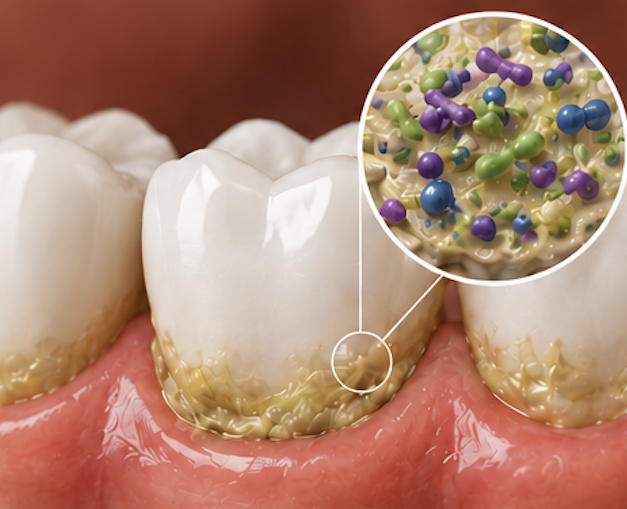
Dental plaque
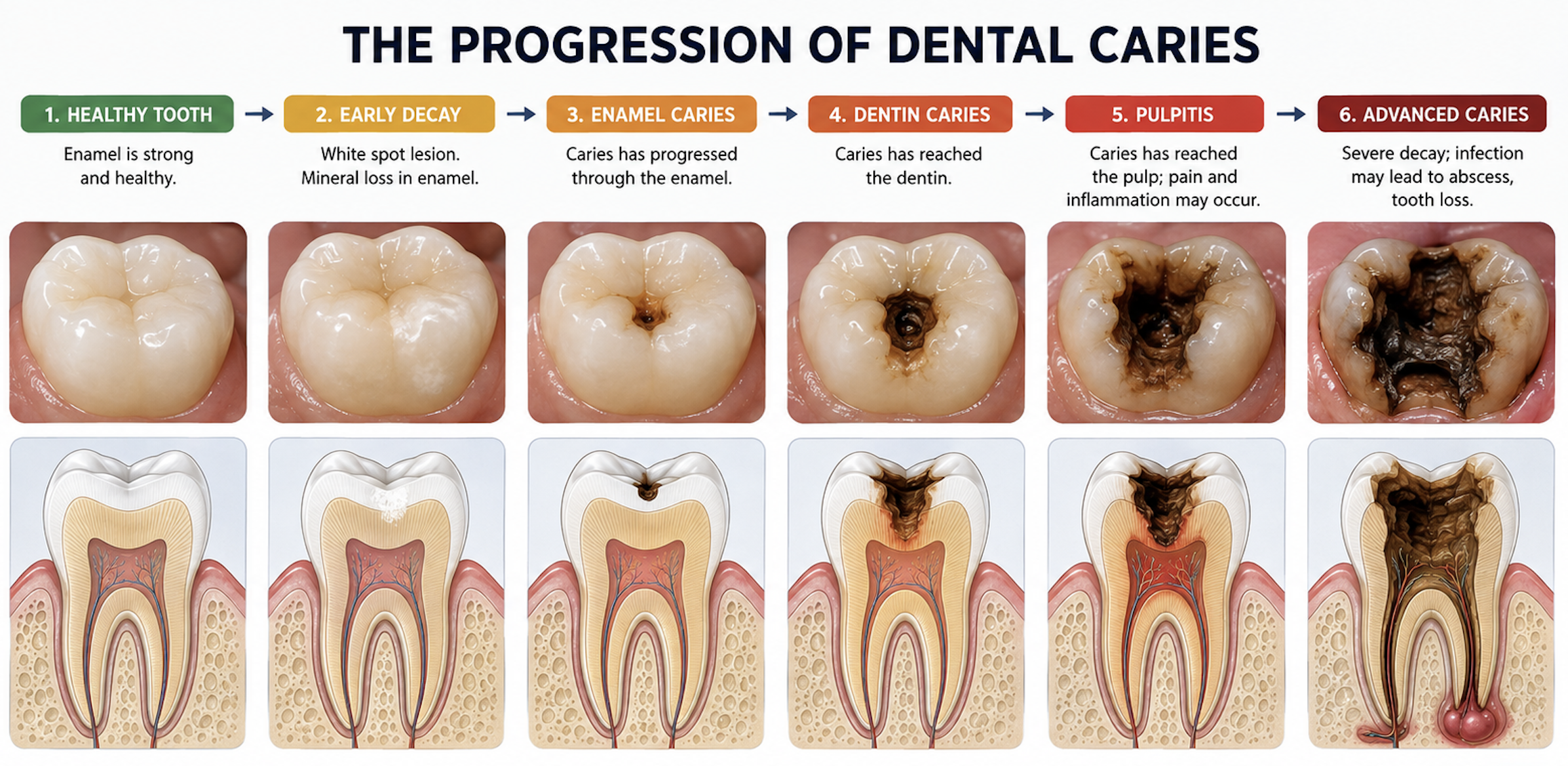
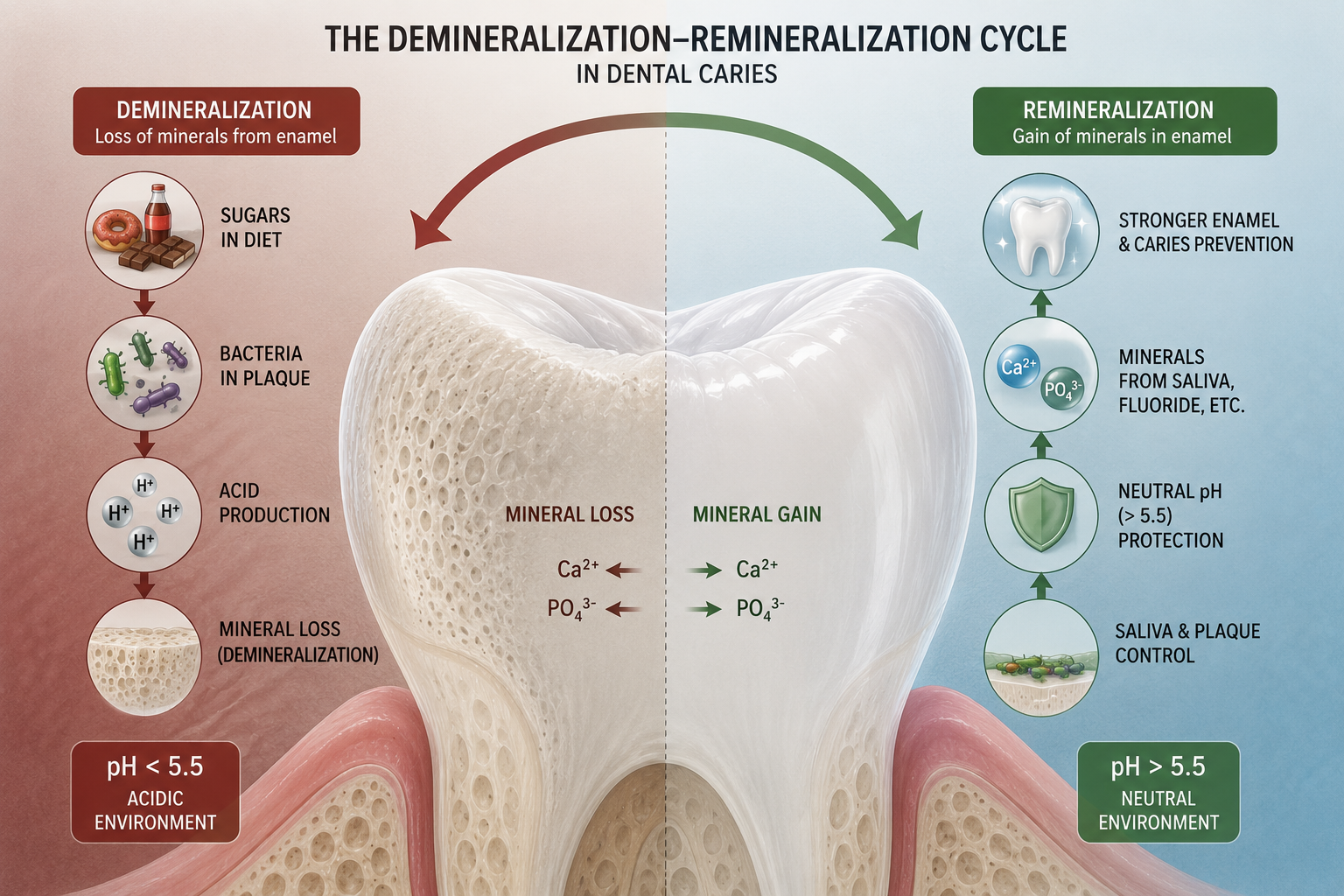
When consuming dietary sugars, the bacteria found in the dental plaque metabolize them and release acidic products which, in turn, destroy the tooth structure by demineralizing it (i.e. dissolving it). Initially, any change in tooth structure is well-localized superficially in the substrate of enamel and can be presented with small white-yellow or brown-black stains on teeth called “white spots”. In advanced stages, a cavity is presented full of bacteria and nutrition residues occurs. In this state pain may be elicited as the pulp found in the interior of the tooth can be inflamed. A cavity due to tooth decay may weaken the tooth structure rendering the tooth more vulnerable to fractures. An abscess in the surrounding bone may also occur. In severe decay cases, the tooth structure is irreversibly destroyed and the tooth is deemed non-salvageable. In abandoned cases, a well-established oral or facial infection may be presented which could have a serious impact on mouth’s functions or even cause secondary infections to distant organs putting the patient’s health at risk.
Saliva: a great defender in the oral cavity
Hopefully, the oral cavity produces saliva which can protect teeth from caries, although not indefinitely. Saliva contains water which has the inherent ability to dilute dietary sugars preventing them from coming in contact with the pathogenic bacteria. It also buffers acids produced by oral bacteria, thereby inhibiting their detrimental action against teeth. Besides, saliva contains calcium, phosphate and other trace elements which aid in promoting tooth remineralization.
In fact, in presence of saliva a constant cycle of decalcification – recalcification of the tooth structure occurs. However, the capacity of remineralization is not always effective. The presence of pathologic dental lesions results from the dominance of decalcification over the process of recalcification. The more regularly an individual consumes sugars, the more the former pathway predominates and the easier it is for tooth decay to develop.
How can we prevent dental caries?
Dental caries, like noted above, is a multifactorial disease mainly attributed to bacteria. However, the use of antibiotics is not applicable, because the bacteria that are responsible for tooth decay are well-organized in a biofilm community which is resistant to antibiotics and other antibacterial agents. In addition, the oral cavity hosts a lot of microorganisms which are useful for its function and its resistance to potential infections. Therefore, any excessive use of antibiotics could interrupt oral cavity’s biological functions and provoke opportunistic infections.
The most important to efficiently prevent the occurrence of dental caries is to reduce the bacterial load found on teeth. This can only be achieved by mechanical means, meaning to remove them by tooth brushing and flossing. Brushing the teeth twice daily and applying the dental floss helps reduce the bacteria from all the tooth surfaces and maintain a great balance between bacteria and the teeth.
Following specific nutrition instructions is also necessary. Avoiding sugar-rich diets, like candys, dried fruits (like raisins) and energy beverages aids in avoiding the process of demineralization. When their consumption is inevitable, the consumption of water or the rinsing of the mouth with plenty of water could be helpful to dilute sugars and reduce the risk of caries. Preferably, vegetables and dairy products should be regularly taken. The former help excrete more saliva and the latter contain calcium which can prevent caries effects.
In any case, a routine control at the dentist every 6 months is recommended to prevent the formation of dental caries, as a professional can easily detect any initial tooth changes and decide if any dietary or oral hygiene changes or supplemental measures are necessary.
How do we treat dental caries?
Initial superficial lesions (commonly known as “white spots”) can be treated non-invasively with professional application of fluoride varnish and regular controls. In advanced stages, at which a small cavity is formed a classic tooth restauration (tooth filling) is required. A profound cavity due to tooth decay may also irreversibly weaken the tooth structure necessitating the realization of a root canal treatment and the placement of a prosthetic crown. In more advanced stages, in which the tooth structure is irreversibly destroyed, extraction and replacement of the tooth is inevitable.
When should you visit your dentist?
For prevention purposes, a visit at a professional every 6 months is very important. In case that caries lesions are detected during professional care, an individualized evaluation protocol may be applied depending on the caries risk of the patient; that is the risk a patient has to develop new caries lesions in the future. Putting the patient under rigorous surveillance is imperative to detect any factor that may potentially contribute to the presence of dental caries, as much as to assure that the patient follows the best regimen possible.